 If you loved our Enterprising Emporiums exhibition about the historic downtown department stores, you wont want to miss the Winter Windowland display at the Rawlings Conservatory. Many of the photographs used from the JMM exhibition will be featured, along with hat boxes and our handsome text panels!
Friday, December 10, 2010
The JMM at the Conservatory!
If you loved our Enterprising Emporiums exhibition about the historic downtown department stores, you wont want to miss the Winter Windowland display at the Rawlings Conservatory. Many of the photographs used from the JMM exhibition will be featured, along with hat boxes and our handsome text panels!


Two Birth Control Pioneers
A blog post by historian Deb Weiner.
 Over the past few months, I’ve been working on the upcoming edition of Generations magazine, which will soon go to press. The theme of the issue is “Social Justice,” and without doubt it’s going to be one of our best ever. There will be orphans running away from the Hebrew Orphan Asylum and feminists clashing with male charity leaders in the 1890s, Communists sponsoring illegal “mixed race dancing” in the 1930s, rabbis and ordinary citizens taking a stand for civil rights in the 1960s. And (as always) much more.
For this blog post, I thought I’d highlight the career of Dr. Bessie Moses (1893-1965), who is featured in an article about ten Baltimoreans who stood up for social justice in the 20th century. Committed to women’s health care from an early age, she became the first female obstetrical intern at Johns Hopkins. In 1927, she and a few other doctors from Hopkins founded Maryland’s first birth control clinic, the Bureau for Contraceptive Advice (in the 1940s it became Planned Parenthood of Maryland). She was the clinic’s medical director, a post she held until 1956.
 Dr. Bessie Moses
 In 1968, Planned Parenthood created the Center for Family Planning Program Development, which became the nation’s leading institute for research, education, and policy analysis related to reproductive health. After Guttmacher’s death, the institute was renamed in his honor.
 Over the past few months, I’ve been working on the upcoming edition of Generations magazine, which will soon go to press. The theme of the issue is “Social Justice,” and without doubt it’s going to be one of our best ever. There will be orphans running away from the Hebrew Orphan Asylum and feminists clashing with male charity leaders in the 1890s, Communists sponsoring illegal “mixed race dancing” in the 1930s, rabbis and ordinary citizens taking a stand for civil rights in the 1960s. And (as always) much more.
For this blog post, I thought I’d highlight the career of Dr. Bessie Moses (1893-1965), who is featured in an article about ten Baltimoreans who stood up for social justice in the 20th century. Committed to women’s health care from an early age, she became the first female obstetrical intern at Johns Hopkins. In 1927, she and a few other doctors from Hopkins founded Maryland’s first birth control clinic, the Bureau for Contraceptive Advice (in the 1940s it became Planned Parenthood of Maryland). She was the clinic’s medical director, a post she held until 1956.
 Dr. Bessie Moses
When the clinic opened, many of its activities were actually illegal according to the Comstock Law, which restricted the dissemination of contraceptives and birth control information. The clinic stayed on the right side of the law by positioning itself as a research institute—and it took its research mandate seriously, conducting important studies on birth control methods such as diaphragms and condoms. It also provided desperately-needed care to women who had nowhere else to turn. As a rigorous scientist and compassionate physician, Moses guided both the research and patient care components.
To avoid controversy that might lead to the clinic’s demise, it served only married women, mostly poor and working-class mothers who already had large families and couldn’t afford another mouth to feed. But Moses didn’t shy away from controversy on a personal level—she became a strong advocate for legalizing birth control, speaking out publicly and testifying at Congressional hearings for repeal of the Comstock Law. (In 1936, a federal court ruled that the Comstock Law did not apply to doctors providing contraception to patients.) Her clinic served blacks as well as whites, although on segregated days, as local custom demanded. In 1938 Moses founded the Northwest Maternal Health Center to serve black patients, the first women’s health clinic in the nation staffed by African American physicians.
 Dr. Alan F. Guttmacher
Moses mentored another Baltimorean who became a nationally-known birth control pioneer, and since he didn’t make it into Generations, I’m glad to have an opportunity to mention him. Dr. Alan F. Guttmacher (1898-1974) was the son of Baltimore Hebrew Congregation Rabbi Adolph Guttmacher and his wife Laura, a feminist, social worker, and leader of local Jewish women’s groups in the early 20th century. He joined the birth control movement as an intern at Hopkins in the 1920s, “after witnessing a woman die from a botched abortion,” according to a profile on the Alan Guttmacher Institute website (more on that later). He became involved in Moses’s clinic, while also teaching at Hopkins and becoming chief of obstetrics and gynecology at Sinai Hospital. In 1952 he moved to New York and held a similar position at Mt. Sinai Hospital.
At age 64, Guttmacher retired from medical practice to become present of the national Planned Parenthood organization. The 1960s were a time of great change in the arena of reproductive rights, and Guttmacher was in the middle of it all, as perhaps the most visible advocate for expanding the availability of birth control and legalizing abortion. “No woman is completely free unless she is wholly capable of controlling her fertility, and … no baby receives its full birthright unless it is born gleefully wanted by its parents,” he stated.
To avoid controversy that might lead to the clinic’s demise, it served only married women, mostly poor and working-class mothers who already had large families and couldn’t afford another mouth to feed. But Moses didn’t shy away from controversy on a personal level—she became a strong advocate for legalizing birth control, speaking out publicly and testifying at Congressional hearings for repeal of the Comstock Law. (In 1936, a federal court ruled that the Comstock Law did not apply to doctors providing contraception to patients.) Her clinic served blacks as well as whites, although on segregated days, as local custom demanded. In 1938 Moses founded the Northwest Maternal Health Center to serve black patients, the first women’s health clinic in the nation staffed by African American physicians.
 Dr. Alan F. Guttmacher
Moses mentored another Baltimorean who became a nationally-known birth control pioneer, and since he didn’t make it into Generations, I’m glad to have an opportunity to mention him. Dr. Alan F. Guttmacher (1898-1974) was the son of Baltimore Hebrew Congregation Rabbi Adolph Guttmacher and his wife Laura, a feminist, social worker, and leader of local Jewish women’s groups in the early 20th century. He joined the birth control movement as an intern at Hopkins in the 1920s, “after witnessing a woman die from a botched abortion,” according to a profile on the Alan Guttmacher Institute website (more on that later). He became involved in Moses’s clinic, while also teaching at Hopkins and becoming chief of obstetrics and gynecology at Sinai Hospital. In 1952 he moved to New York and held a similar position at Mt. Sinai Hospital.
At age 64, Guttmacher retired from medical practice to become present of the national Planned Parenthood organization. The 1960s were a time of great change in the arena of reproductive rights, and Guttmacher was in the middle of it all, as perhaps the most visible advocate for expanding the availability of birth control and legalizing abortion. “No woman is completely free unless she is wholly capable of controlling her fertility, and … no baby receives its full birthright unless it is born gleefully wanted by its parents,” he stated.
 In 1968, Planned Parenthood created the Center for Family Planning Program Development, which became the nation’s leading institute for research, education, and policy analysis related to reproductive health. After Guttmacher’s death, the institute was renamed in his honor.
Wednesday, December 8, 2010
Sadie Stay…Just a little bit longer!
A blog post my marketing director Simone Ellin.
 Don’t miss the JMM’s new traveling exhibition VOTE: The Life and Work of Sadie Jacobs Crockin 1879 – 1965. The new and original exhibition, curated by former JMM curator Barry Kessler will open this Sunday, December 12 from 12:00 – 4:00 p.m. and will be on display in the JMM lobby until January 3, when it will move to the Women’s Heritage Center in Baltimore.
 As JMM p/r and marketing director, I wish that Sadie could stay with us just a little bit longer… Folks’ schedules being what they are, compounded by the holiday season, makes me worry that some will miss the exhibition at its original home. But such is the life of a museum p/r person. It seems I’m always trying to promote exhibitions and programs early, but there’s always some glitch. Openings have to be scheduled around holidays, football games, weather, conflicting Jewish and secular events of all kinds, and dates are always changing. Even naming exhibitions can slow things down! Do you know how long it took the JMM staffers to agree on the name for the Sadie Crockin show? Actually, I take that back, not everyone is in agreement even now. I can’t create press kits without knowing the name of a show, the opening and closing dates, and all the information about the funders.


Items above will be on display ONLY at the JMM! Don't miss them!
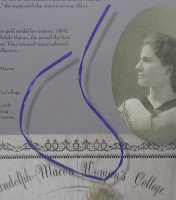


 Don’t miss the JMM’s new traveling exhibition VOTE: The Life and Work of Sadie Jacobs Crockin 1879 – 1965. The new and original exhibition, curated by former JMM curator Barry Kessler will open this Sunday, December 12 from 12:00 – 4:00 p.m. and will be on display in the JMM lobby until January 3, when it will move to the Women’s Heritage Center in Baltimore.
 As JMM p/r and marketing director, I wish that Sadie could stay with us just a little bit longer… Folks’ schedules being what they are, compounded by the holiday season, makes me worry that some will miss the exhibition at its original home. But such is the life of a museum p/r person. It seems I’m always trying to promote exhibitions and programs early, but there’s always some glitch. Openings have to be scheduled around holidays, football games, weather, conflicting Jewish and secular events of all kinds, and dates are always changing. Even naming exhibitions can slow things down! Do you know how long it took the JMM staffers to agree on the name for the Sadie Crockin show? Actually, I take that back, not everyone is in agreement even now. I can’t create press kits without knowing the name of a show, the opening and closing dates, and all the information about the funders.


Items above will be on display ONLY at the JMM! Don't miss them!
I wish I’d had more time to let people know that this great show will be with us for a few precious weeks. Of course, people can see the exhibition at other local venues, but really – you should see it here! I hope you will join us for the opening reception this Sunday. You’ll learn that Sadie Jacobs Crockin was a really important and influential woman who made great strides in the early women’s rights movement, and in support of children. She led the Baltimore chapters of the League of Women Voters, as well as Hadassah. At the opening, admission to the Museum will be free, refreshments will be served, and you will be part of a special celebration in honor of the League of Women’s Voters 90th anniversary. Hope to see you there!


A quick sneak peek at the exhibit!
Don't forget to come and see it in all its glory this Sunday at the JMM!
Don't forget to come and see it in all its glory this Sunday at the JMM!
Tuesday, December 7, 2010
Once Upon a Time...
Once Upon a Time 9.03.2010
The Baltimore Jewish Times publishes unidentified photographs from the collection of Jewish Museum of Maryland each week. If you can identify anyone in these photos and more information about them, contact Jobi Zink, Senior Collections Manager and Registrar at 410.732.6400 x226 or jzink@jewishmuseummd.org.
Date run in Baltimore Jewish Times: 9/3/10
 PastPerfect Accession #: 2009.040.5186
Middle Rows: Warren Silverman, Herbie Sachs, Zelig Wolfe, Larry Wolf, Alvin Bard, Howard Pierce, Leon Stern, Myron “Maishe” Bloom, (?) Mendelson, Jerry Rabinowitz
Back Row: Billy Eisenberg, Mike Flaxman, Eugene Padow, Irving Friedman, Joel Sinsky and Sidney Krome
Special thanks to: Larry Wolf, Alvin Bard, Ellen Weinstein Pozornik, Toba Falk, Nadine Goldman, Marcia Radin Craven
Check out "Thanksgiving in Connecticut!"
 Pop over to our sister blog "Chosen Food" to read the most recent post about Thanksgiving and leave us some comments about your own T-day celebrations!
"This was an exciting year for me – I don’t usually like to travel around Thanksgiving (too many cars doing too many stupid things on the roads), but because of a backlog of vacation time I was able to take a whole week off and, avoiding holiday traffic, head up to my family in Connecticut to celebrate Thanksgiving in style!"
Monday, December 6, 2010
Celebrating Hanukkah, Modern Style
A blog post by Outreach Coordinator Rachael Binning.
 Happy Hanukkah! This year I’m celebrating Hanukkah away from my family which means that I’ve had to be a bit more creative about how I celebrate this year. I can’t rely on feeling festive though the boxes of decorations my family has collected over the years or by eating my mom’s homemade applesauce (with Red Hots to make it pink and spicy), or by being with my family as each of us lights our own special menorah. Instead, I’ve resorted to some more non-traditional and modern takes on celebrating the holiday on my own. So instead of eating my dad’s homemade latkes and scheming with my sister over what night we should open which gift, I’ve been doing this:
Listening to Surprisingly Modern (and good!) Hanukkah Songs:
 Songs in the Key of Hanukkah by Erran Barron Cohen
I’ve actually been listening to “Songs in the Key of Hanukkah” by Erran Baron Cohen for a few years now, but when I rediscovered it last night I was so glad I did. Erran Baron Cohen, the brother Sacha Baron Cohen (think Borat), released a Hanukkah album a few years ago which I love. The songs on the album, which are performed by a diverse group of musicians, are ones that I would not mind listening to throughout the year. In an NPR interview Cohen said that he created this album because he was unsatisfied with the Hanukkah songs he group up listening to. The album is a compilation of modern takes on traditional songs and new music. One of my favorite songs is “A la Luz de la Vela” (In the Light of the Candles) a beautiful song that is sung in Ladino (Spanish and Hebrew) by Yasmin Levy. The album probably isn’t for everyone (I can see some people being turned off by the modern takes on traditional holiday favorites), but it’s worth at least checking out listening to Erran Baron Cohen’s interview and the few songs posted on NPR’s site.
 Miracle by Matisyahu
Matisyahu has a new Hanukkah song called “Miracle,” which is so catchy that I think it should be played on the radio right now! Matisyahu was recently interviewed on NRP about the new song, being a Chasidic reggae singer, and Hanukkah. Visit Matisyahu’s website to watch the very entertaining music video for the song.
Hosting a Holiday Party With My Roommates:
 Chrismakah Tree
I live with two roommates (who I love!) who are not Jewish. However, we all appreciate getting into the holiday spirit and enjoy spending times with friends and family around this time of year. This year we are hosting a holiday decorating party, which I’m very excited about because we will be making Christmas and Hanukkah decorations while frying latkes and drinking mulled wine. Does it get any better than that? I also love the idea of this holiday party because we get to share our different traditions and cultures with each other. I’ve never lived in a house with a Christmas tree and this year I will be able to partake in that tradition. My roommates will get to assist me (or knowing my cooking skills, take the lead) in attempting to fry up some latkes.
I asked some of my friends who now live on their own what they do for Hanukkah and one of them said that she just came back from a Hanukkah party where they had a gift exchange. This isn’t a new idea, but it’s a good one for young adults on a tight budget. I love giving and receiving gifts, but the cost quickly adds up. My roommates and I are also thinking of adding a charity component to our party. Our ideas included donating to a local charity or having each guest bring canned goods. I really love this idea and I think it’s a great way to get in the holiday spirit.
Listening to Stories:
 My sister’s fireproof menorah.
I’ll be the first to admit that I’m usually not a great muti-tasker (talking on the phone while typing is not my forte). I am however great at listening to stories (such as NPR or This American Life) while cleaning my room, walking the dog, or participating in other relatively mindless activities. Last night rather than eating latkes and spinning dreidles I ended up listening to NPR’s yearly program called Hanukkah Lights while cleaning my room and eating Thai food. This is the 20th Anniversary of the program and that each year presents an hour of commissioned stories focused on Hanukkah. Based on the other links I’ve posted in this blog post I’m sure you’ve noticed I am an avid NPR listener, but I think this program is especially great. Hanukkah Lights puts Judaism’s strong oral tradition in a modern context while remaining entertaining and educating the public about some of the many themes of Hanukkah. Jews love to tell stories, and indeed most of our holidays are based around stories, so it’s important to see that the storytelling tradition (both fiction and non-fiction) keeps up in the modern age.
I’m not saying that I don’t miss celebrating a traditional Hanukkah with my family because I do, but I’m glad that there are alternative ways for me to participate in the themes and tradition of the holiday this year. Finally, I’ll leave you with a picture of my family celebrating Hanukkah about 20 years ago (oy!). My sister Sarah is wearing a tiara (she’s always thought that she was a princess) and I have the red bow in my hair. Those days, including my mom’s long red nails, are long gone.
 The Binning Family Celebrates Hanukkah!
 Happy Hanukkah! This year I’m celebrating Hanukkah away from my family which means that I’ve had to be a bit more creative about how I celebrate this year. I can’t rely on feeling festive though the boxes of decorations my family has collected over the years or by eating my mom’s homemade applesauce (with Red Hots to make it pink and spicy), or by being with my family as each of us lights our own special menorah. Instead, I’ve resorted to some more non-traditional and modern takes on celebrating the holiday on my own. So instead of eating my dad’s homemade latkes and scheming with my sister over what night we should open which gift, I’ve been doing this:
Listening to Surprisingly Modern (and good!) Hanukkah Songs:
 Songs in the Key of Hanukkah by Erran Barron Cohen
I’ve actually been listening to “Songs in the Key of Hanukkah” by Erran Baron Cohen for a few years now, but when I rediscovered it last night I was so glad I did. Erran Baron Cohen, the brother Sacha Baron Cohen (think Borat), released a Hanukkah album a few years ago which I love. The songs on the album, which are performed by a diverse group of musicians, are ones that I would not mind listening to throughout the year. In an NPR interview Cohen said that he created this album because he was unsatisfied with the Hanukkah songs he group up listening to. The album is a compilation of modern takes on traditional songs and new music. One of my favorite songs is “A la Luz de la Vela” (In the Light of the Candles) a beautiful song that is sung in Ladino (Spanish and Hebrew) by Yasmin Levy. The album probably isn’t for everyone (I can see some people being turned off by the modern takes on traditional holiday favorites), but it’s worth at least checking out listening to Erran Baron Cohen’s interview and the few songs posted on NPR’s site.
 Miracle by Matisyahu
Matisyahu has a new Hanukkah song called “Miracle,” which is so catchy that I think it should be played on the radio right now! Matisyahu was recently interviewed on NRP about the new song, being a Chasidic reggae singer, and Hanukkah. Visit Matisyahu’s website to watch the very entertaining music video for the song.
Hosting a Holiday Party With My Roommates:
 Chrismakah Tree
I live with two roommates (who I love!) who are not Jewish. However, we all appreciate getting into the holiday spirit and enjoy spending times with friends and family around this time of year. This year we are hosting a holiday decorating party, which I’m very excited about because we will be making Christmas and Hanukkah decorations while frying latkes and drinking mulled wine. Does it get any better than that? I also love the idea of this holiday party because we get to share our different traditions and cultures with each other. I’ve never lived in a house with a Christmas tree and this year I will be able to partake in that tradition. My roommates will get to assist me (or knowing my cooking skills, take the lead) in attempting to fry up some latkes.
I asked some of my friends who now live on their own what they do for Hanukkah and one of them said that she just came back from a Hanukkah party where they had a gift exchange. This isn’t a new idea, but it’s a good one for young adults on a tight budget. I love giving and receiving gifts, but the cost quickly adds up. My roommates and I are also thinking of adding a charity component to our party. Our ideas included donating to a local charity or having each guest bring canned goods. I really love this idea and I think it’s a great way to get in the holiday spirit.
Listening to Stories:
 My sister’s fireproof menorah.
 I’ll be the first to admit that I’m usually not a great muti-tasker (talking on the phone while typing is not my forte). I am however great at listening to stories (such as NPR or This American Life) while cleaning my room, walking the dog, or participating in other relatively mindless activities. Last night rather than eating latkes and spinning dreidles I ended up listening to NPR’s yearly program called Hanukkah Lights while cleaning my room and eating Thai food. This is the 20th Anniversary of the program and that each year presents an hour of commissioned stories focused on Hanukkah. Based on the other links I’ve posted in this blog post I’m sure you’ve noticed I am an avid NPR listener, but I think this program is especially great. Hanukkah Lights puts Judaism’s strong oral tradition in a modern context while remaining entertaining and educating the public about some of the many themes of Hanukkah. Jews love to tell stories, and indeed most of our holidays are based around stories, so it’s important to see that the storytelling tradition (both fiction and non-fiction) keeps up in the modern age.
I’m not saying that I don’t miss celebrating a traditional Hanukkah with my family because I do, but I’m glad that there are alternative ways for me to participate in the themes and tradition of the holiday this year. Finally, I’ll leave you with a picture of my family celebrating Hanukkah about 20 years ago (oy!). My sister Sarah is wearing a tiara (she’s always thought that she was a princess) and I have the red bow in my hair. Those days, including my mom’s long red nails, are long gone.
 The Binning Family Celebrates Hanukkah!
Friday, December 3, 2010
November at the JMM
A blog post by education director Deborah Cardin.
 I just finished compiling stats for November 2010 at the JMM. Every month, I tally our on-site attendance with separate categories dedicated to walk-in visitors, adult group members, schools, special events, and rentals. I am now in my 9th year as “keeper of the stats” and it is interesting to compare and contrast the ebb and flow of visitation over the years as we try and track trends and determine the various factors (weather, season, new exhibitions, popular programs, etc.) that seem to encourage higher numbers of visitors. School groups, in particular, are a special area of interest. As we work to promote our programs and resources to even larger numbers of school groups, I always pay particular attention to our monthly totals in an effort to discern how we can continue to grow our program.
November was a banner month for school groups. During the month, we served 834 students, teachers, and chaperones (as compared to just over 400 last November). One of the most influential factors driving school group visitation during the month was our installation of the exhibition, A Blessing To One Another: Pope John Paul II and the Jewish People. While many groups booked visits to see this exhibition – and we also saw the number of walk-in visitors rise – Catholic schools, in particular, demonstrated a high level of interest in bringing groups to see the exhibition. During November alone, we served 606 students, teachers, and chaperones from Catholic schools and universities.
One of the challenges in serving such large number of student groups is the limited space within the gallery housing A Blessing To One Another. As many of our docents have pointed out, ideal group sizes for a guided exhibition tour is 15 or fewer and yet, the average size group of students is larger than 50. It, therefore, becomes necessary to break the classes into smaller groups and rotate each group through various stations. This also necessitates bringing on additional volunteer docents and staff to help facilitate.
On November 16, 75 students from The Catholic High School, an all-girls school in Baltimore City, visited for a half-day trip. The large number of students necessitated some creative thinking as to how we could break them into smaller groups and facilitate meaningful activities with each group. We decided to split them into four groups. Two groups were combined for an Introduction to Judaism program in the Lloyd Street Synagogue (which can accommodate larger numbers of students) where students learned about Jewish history, traditions, and customs. This station proved to be a terrific complement to the Blessing To One Another exhibition where students could ask questions and probe the significance of Jewish ritual items.
 Catholic HS girls participating in an Introduction to
Judaism program led by JMM docent Lois Fekete.
The other two groups were split between A Blessing To One Another and The Synagogue Speaks! exhibition that explores the histories of the three different congregational groups (including a Lithuanian Catholic church) that occupied the Lloyd Street Synagogue at different times in history. The Synagogue Speaks! station included hands-on interactive activities that encouraged students to work together in teams and to solve mysteries of how the building changed over time.
 Catholic HS students creating watercolors in The Synagogue Speaks!
The program culminated with a presentation by Holocaust survivor Rachel Bodner who shared her personal experiences of life before, during, and after the Holocaust.
 Catholic HS students listening to Holocaust survivor, Rachel Bodner
Through these various activities and presentations, students received an intensive learning experience that touched on many aspects of their classroom lessons. One of the teachers from The Catholic High School shared his feedback about the field trip with JMM staff: “Thank you so much for helping to plan our experience at the museum. My students had an amazing experience and are still talking about it today. I cannot express how grateful I am for the museum, you, your staff, the volunteers, and the wonderful programs that you have available. The other faculty members and myself were discussing how we can incorporate the museum into our curriculum to make it a yearly event.”
The next day, we received a visit by a joint group of students visiting from St. Frances Academy and Shoshana S. Cardin High School. This interfaith gathering of students of Jewish and Catholic faiths was inspired by the Blessing To One Another exhibition. Students were split into small mixed groups and toured the exhibition with the assistance of worksheets looking for examples of how Pope John Paul II worked towards building positive relationships between Jews and Catholics throughout his life. As I walked through the exhibit asking students if they needed assistance finding answers to worksheet questions, I kept hearing from students that they were equally interested in getting to know their peers from the other school and they were conversing about mutual interest in sports, music, etc. I took this as a sign that the program was successful!
Again, we received positive feedback about the field trip from both teachers and students. “I just wanted to thank you for the experience yesterday. It proved to be a wonderful example of Judeo-Christian camaraderie and dialogue. I thought it went great, and my students were genuinely interested throughout the visit. I could not even get anyone to admit to liking one part of the day over the other, they said again and again, that it was great from beginning to end.”
While we are always pleased to serve high numbers of students and teachers, we are even more concerned with the quality of the programs. Feedback that we receive through teacher and student surveys (such as the comments shared above) provides guidance as we plan new programs and activities. We are grateful to all of the JMM staff and volunteer docents who provided such superior service for school groups this month and look forward to developing new tours, resources, and activities in the months ahead.
While it was an exhausting month, comments from students such as this St. Frances Academy student, truly make it all worthwhile!

 I just finished compiling stats for November 2010 at the JMM. Every month, I tally our on-site attendance with separate categories dedicated to walk-in visitors, adult group members, schools, special events, and rentals. I am now in my 9th year as “keeper of the stats” and it is interesting to compare and contrast the ebb and flow of visitation over the years as we try and track trends and determine the various factors (weather, season, new exhibitions, popular programs, etc.) that seem to encourage higher numbers of visitors. School groups, in particular, are a special area of interest. As we work to promote our programs and resources to even larger numbers of school groups, I always pay particular attention to our monthly totals in an effort to discern how we can continue to grow our program.
November was a banner month for school groups. During the month, we served 834 students, teachers, and chaperones (as compared to just over 400 last November). One of the most influential factors driving school group visitation during the month was our installation of the exhibition, A Blessing To One Another: Pope John Paul II and the Jewish People. While many groups booked visits to see this exhibition – and we also saw the number of walk-in visitors rise – Catholic schools, in particular, demonstrated a high level of interest in bringing groups to see the exhibition. During November alone, we served 606 students, teachers, and chaperones from Catholic schools and universities.
One of the challenges in serving such large number of student groups is the limited space within the gallery housing A Blessing To One Another. As many of our docents have pointed out, ideal group sizes for a guided exhibition tour is 15 or fewer and yet, the average size group of students is larger than 50. It, therefore, becomes necessary to break the classes into smaller groups and rotate each group through various stations. This also necessitates bringing on additional volunteer docents and staff to help facilitate.
On November 16, 75 students from The Catholic High School, an all-girls school in Baltimore City, visited for a half-day trip. The large number of students necessitated some creative thinking as to how we could break them into smaller groups and facilitate meaningful activities with each group. We decided to split them into four groups. Two groups were combined for an Introduction to Judaism program in the Lloyd Street Synagogue (which can accommodate larger numbers of students) where students learned about Jewish history, traditions, and customs. This station proved to be a terrific complement to the Blessing To One Another exhibition where students could ask questions and probe the significance of Jewish ritual items.
 Catholic HS girls participating in an Introduction to
Judaism program led by JMM docent Lois Fekete.
The other two groups were split between A Blessing To One Another and The Synagogue Speaks! exhibition that explores the histories of the three different congregational groups (including a Lithuanian Catholic church) that occupied the Lloyd Street Synagogue at different times in history. The Synagogue Speaks! station included hands-on interactive activities that encouraged students to work together in teams and to solve mysteries of how the building changed over time.
 Catholic HS students creating watercolors in The Synagogue Speaks!
The program culminated with a presentation by Holocaust survivor Rachel Bodner who shared her personal experiences of life before, during, and after the Holocaust.
 Catholic HS students listening to Holocaust survivor, Rachel Bodner
Through these various activities and presentations, students received an intensive learning experience that touched on many aspects of their classroom lessons. One of the teachers from The Catholic High School shared his feedback about the field trip with JMM staff: “Thank you so much for helping to plan our experience at the museum. My students had an amazing experience and are still talking about it today. I cannot express how grateful I am for the museum, you, your staff, the volunteers, and the wonderful programs that you have available. The other faculty members and myself were discussing how we can incorporate the museum into our curriculum to make it a yearly event.”
The next day, we received a visit by a joint group of students visiting from St. Frances Academy and Shoshana S. Cardin High School. This interfaith gathering of students of Jewish and Catholic faiths was inspired by the Blessing To One Another exhibition. Students were split into small mixed groups and toured the exhibition with the assistance of worksheets looking for examples of how Pope John Paul II worked towards building positive relationships between Jews and Catholics throughout his life. As I walked through the exhibit asking students if they needed assistance finding answers to worksheet questions, I kept hearing from students that they were equally interested in getting to know their peers from the other school and they were conversing about mutual interest in sports, music, etc. I took this as a sign that the program was successful!
Again, we received positive feedback about the field trip from both teachers and students. “I just wanted to thank you for the experience yesterday. It proved to be a wonderful example of Judeo-Christian camaraderie and dialogue. I thought it went great, and my students were genuinely interested throughout the visit. I could not even get anyone to admit to liking one part of the day over the other, they said again and again, that it was great from beginning to end.”
While we are always pleased to serve high numbers of students and teachers, we are even more concerned with the quality of the programs. Feedback that we receive through teacher and student surveys (such as the comments shared above) provides guidance as we plan new programs and activities. We are grateful to all of the JMM staff and volunteer docents who provided such superior service for school groups this month and look forward to developing new tours, resources, and activities in the months ahead.
While it was an exhausting month, comments from students such as this St. Frances Academy student, truly make it all worthwhile!

Subscribe to:
Posts (Atom)


 Posts
Posts


